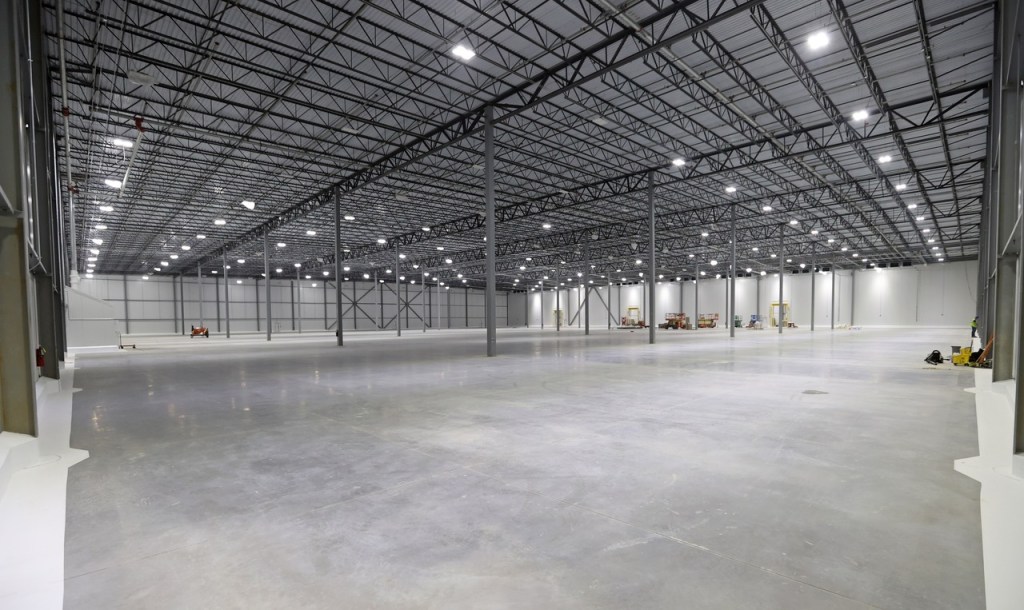
Cleveland’s industrial market closed 2025 revealing a tale of two markets, where new facilities captured strong tenant demand while older inventory struggled to compete, creating opportunities for strategic investors willing to modernize assets.
The 4th quarter data from JLL, combined with broader regional analysis, illustrates how Cleveland’s industrial sector is adapting to changing tenant priorities and economic pressures while maintaining its position as a competitive Midwest industrial hub.
Q4 Cleveland Market Highlights
Asset Quality Defines Market Performance: While Cleveland recorded negative net absorption of 697,647 square feet overall, this figure masks a more complex story. Premium Class A facilities captured substantial tenant interest with over 1.2 million square feet of positive absorption, demonstrating that demand remains robust for the right product type.
Submarket Variations Create Investment Opportunities: Regional performance varied significantly across Cleveland’s various submarkets. The Southeast submarket emerged as a standout performer, generating 823,406 square feet of positive absorption throughout 2025. This contrasts sharply with challenges in Lorain and Summit County, suggesting that location and asset characteristics increasingly determine success.
Rental Growth Persists Despite Headwinds: Average asking rents reached $5.69 per square foot, continuing the upward momentum established in previous quarters. This pricing resilience, combined with vacancy holding steady at 3.7%, indicates that supply-demand fundamentals remain supportive for property owners with quality assets.
Construction Pipeline Reflects Market Confidence: Developer activity increased modestly in 2025, with notable deliveries including Seasons Business Center 7 in Stow. The current development pipeline of 515,211 square feet shows 43.7% preleasing, suggesting measured but growing optimism about near-term absorption prospects.
Investment and Transaction Activity
Value-Add Strategies Drive Sales: The quarter’s most significant transactions reflect a clear investment theme focused on asset repositioning. ICP’s $17.25 million acquisition of Westlake’s former True Value facility exemplifies this trend, with planned improvements targeting 2026 delivery. Similarly, Conexus Food Solutions’ $8.4 million purchase in Solon demonstrates continued interest in transformation opportunities within Cleveland’s industrial stock.
These transactions signal that sophisticated investors recognize Cleveland’s potential for creating value through strategic improvements rather than relying solely on market appreciation.
Regional Market Context and Comparative Performance
Broader Northeast Ohio data from Colliers reveals the regional scope of market dynamics, with negative absorption of 3.2 million square feet across the extended Cleveland-Akron area. Major facility closures, including JoAnn Fabrics’ Hudson headquarters, contributed substantially to available inventory and highlighted the impact of corporate consolidations on local industrial markets.
Vacancy rates across the region increased to 5.1% from previous levels near 3%, indicating a market transitioning from extremely tight conditions toward better balance between supply and demand. This normalization creates opportunities for both tenants seeking space and investors targeting strategic acquisitions.
Economic Factors Shaping Market Behavior
Interest Rate Environment Influences Decisions: Elevated borrowing costs have encouraged more conservative tenant expansion strategies, resulting in increased renewal activity as companies prioritize operational continuity over growth initiatives. This trend benefits landlords with quality assets by reducing turnover and extending average lease terms.
Manufacturing Sector Uncertainty: Ongoing economic volatility has created cautious sentiment among industrial users, though underlying demand for efficient facilities remains strong. Cleveland’s established manufacturing base provides some insulation from broader economic pressures while positioning the market to benefit from nearshoring trends.
Market Evolution and Strategic Implications
Technology and Automation Influence Space Needs: Modern industrial users increasingly require facilities designed to accommodate advanced logistics technology and automated systems. This evolution favors newer construction while creating obsolescence risk for older buildings lacking the infrastructure to support contemporary operations.
Supply Chain Resilience Priorities: Recent global disruptions have reinforced the importance of domestic manufacturing capacity and regional distribution networks. Cleveland’s central location and established industrial infrastructure position it favorably to capture investment from companies prioritizing supply chain resilience.
Forward-Looking Considerations
Asset Repositioning Opportunities: The performance gap between building classes creates compelling investment opportunities for groups capable of modernizing older industrial stock. Strategic improvements can transform underperforming assets into competitive facilities, as demonstrated by recent acquisition activity.
Market Rebalancing Process: The modest increase in vacancy rates represents healthy market evolution rather than weakness, providing tenants with improved selection while maintaining landlord pricing power for quality assets. This balance should support steady growth as economic conditions stabilize.
Infrastructure and Connectivity Advantages: Cleveland’s transportation infrastructure and utility capacity continue supporting industrial growth, with ongoing improvements enhancing the region’s competitive position relative to markets facing infrastructure constraints.
Summary
Cleveland’s Q4 2025 industrial market performance illustrates a sector undergoing strategic evolution, where asset quality and operational efficiency increasingly determine success. While overall absorption remained negative due to older building stock challenges, strong Class A performance and strategic investment activity demonstrate underlying market strength.
The combination of disciplined development practices, strategic repositioning opportunities, and Cleveland’s fundamental competitive advantages should support continued market stability and growth prospects. Investors and tenants who recognize these evolving dynamics will be best positioned to capitalize on Cleveland’s industrial market transformation in 2026 and beyond.
Sources: JLL Research, Jones Lang LaSalle IP, Inc., Q4 2025 Industrial Market Dynamics Reports, Crain’s Cleveland


 Cleveland Industrial Real Estate
Leave a comment