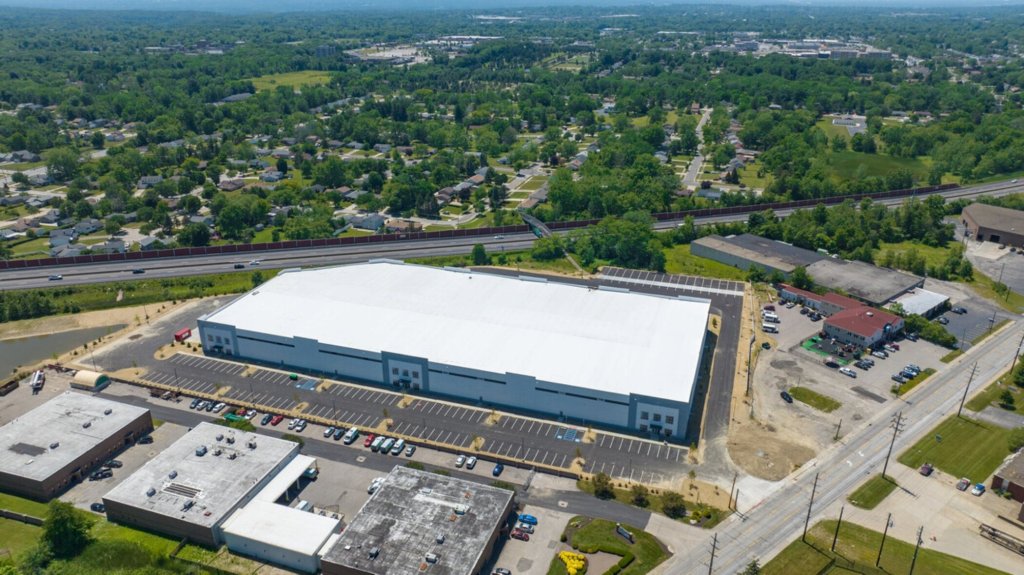
Cleveland’s industrial real estate market continued to demonstrate resilience and strength in the first quarter of 2025, mirroring broader national trends in the industrial sector despite recent economic uncertainty surrounding President Trump’s trade and tariff policies.
Here are the key takeaways from JLL’s latest market report, along with additional context on the U.S. industrial market and the impact of recent trade policies.
Q1 Trends and Data
- Positive Absorption: Cleveland recorded 244k square feet of positive net absorption, indicating continued steady demand for industrial space across the region. This aligns with the national trend of robust industrial demand, driven by e-commerce growth and manufacturing reshoring efforts. JLL tracked over 123m square feet of leasing activity in Q1 across the U.S., the strongest quarter since mid 2024.
- Rent Growth: Direct rents in Cleveland increased by 3.0% YoY. Nationally, industrial rents have been on an upward trajectory, with some markets seeing even steeper increases due to limited supply and high demand.
- Limited New Supply: Only 807k square feet of new industrial space was delivered in Cleveland over the past four quarters. This scarcity of new supply is a common theme across many U.S. markets, contributing to low vacancy rates and rent growth. Specifically, the current industrial development pipeline across the U.S. fell to its lowest level since 2015, and decreasing by 29% YoY.
- Low Vacancy Rates: Cleveland’s total vacancy rate remained low at 3.3%. The national average vacancy rate is 7.3%, a slight increase compared to Q4 2024. Overall, vacancy rates continue to hover near historic lows in many regions across the country.
- Class A Performance: Class A properties in Cleveland saw the majority of occupancy gains, with average asking rents of $6.57 per square foot. Nationwide, there’s a growing preference for modern, high-quality industrial facilities that can accommodate advanced manufacturing and logistics operations.
- Development Pipeline: Cleveland’s current development pipeline is 67.3% preleased. This high pre-leasing rate reflects the strong demand for industrial space and is a positive indicator for the market’s future performance.

*Cleveland supply and demand chart
The U.S. industrial real estate market has remained robust in 2025, despite economic uncertainties. The sector has benefited from several key drivers:
- E-commerce Growth: The continued expansion of online retail has fueled demand for warehousing and distribution centers across the country.
- Reshoring and Near-shoring: Recent geopolitical tensions and supply chain disruptions have led many companies to bring manufacturing and distribution operations closer to home, boosting demand for industrial space in the U.S.
- Last Mile Delivery: The focus on quick delivery times has increased the need for smaller, urban industrial facilities to serve as last-mile distribution hubs.
- AI Boom: The exponential growth of AI computing has led to an increase in demand for new data centers across the U.S.

Despite these favorable tailwinds, the industrial real estate market hasn’t been immune to challenges. The implementation of new tariffs has created both opportunities and uncertainties for domestic and international companies alike:
- Supply Chain Reconfiguration: Companies are reassessing their supply chains in response to tariffs, potentially leading to shifts in industrial space demand across different regions of the U.S..
- Increased Costs: Tariffs on construction materials have raised development costs for new industrial projects, potentially slowing the pipeline of new supply in some markets.
- Inventory Stockpiling: Some businesses have increased their inventory levels to hedge against potential tariff increases, leading to short term spikes in warehouse demand.
- Regional Impacts: Markets with strong ties to international trade, particularly port cities, may see more more dramatic effects from tariff policies.
According to JLL’s Global Real Estate Perspective for May 2025, the industrial sector globally has shown signs of stabilizing demand in Q1, although uncertainty clouds the outlook. The report notes that many industrial tenants are reviewing the impact of new tariffs on their supply chains and operations, which could influence future space decisions.
Looking ahead, Cleveland’s industrial market is well-positioned to navigate these national and global trends. Its strategic location, diverse industrial base, and ongoing infrastructure improvements continue to make it an attractive option for businesses seeking to optimize their supply chains in the face of evolving trade policies.
Sources: JLL, JLL Research, CoStar, Jones Lang LaSalle IP, Inc.


 Cleveland Industrial Real Estate
Leave a comment